

Meditation
The Science of "Being Still"
Disclaimer: The information provided on this page is for educational purposes only. If you have a history of severe mental health challenges or trauma, please consult a professional before beginning intense meditation practices.
The Harvard Study (The "Proof")
In 2011, a study led by Sara Lazar at Harvard University showed that just eight weeks of Mindfulness-Based Stress Reduction (MBSR) literally changed the shape of the participants' brains.
The Growth: They saw increased cortical thickness in the Hippocampus, the area responsible for learning, memory, and emotional regulation.
The Shrinking: They saw a decrease in cell volume in the Amygdala, the brain's "fight or flight" center.
This is the neuroscience of spiritual experiences in action. You aren't just "relaxing"; you are physically remodeling your brain to be less reactive to stress and more capable of peace.
For years, I thought meditation was about sitting in a pretzel shape and trying to force my brain to shut up. It felt boring, frustrating, and honestly, a little useless. I was looking for a skeptic’s guide to spirituality, not a religious ritual.
Not Just for Monks: The Hardware Upgrade

From Julia’s Journal:
"It took me 20 years to finally get into meditation. For a long time, it just felt like mumbo-jumbo. I couldn’t grasp how sitting down and breathing could help me understand the complex spiritual experiences I was having. I was looking for a 'provable' way to understand the unseen. I only got into it around age 40, when I literally ran out of other options. Little did I know that this was the only way to experience, and in my case, experiencing was the only way to understand. It was the bridge between logic vs faith in spirituality.".
The "Hardcore" Side: Hacking Consciousness
Once you get past the stress relief, meditation becomes a portal. For those interested in the silver cord (astral projection), lucid dreaming, or connecting with the "unseen," understanding your brainwaves is the key to the door.
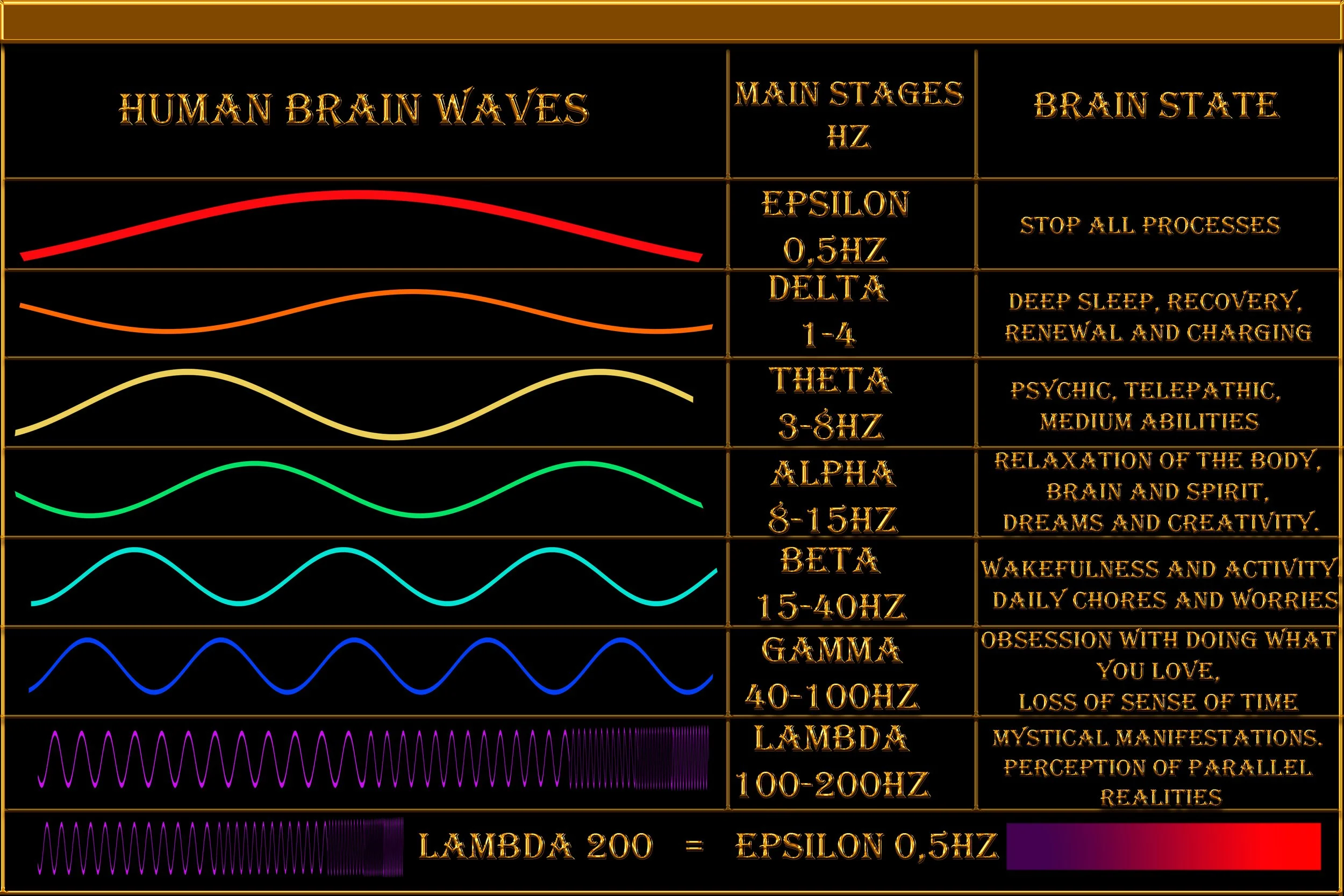
Most of our waking life is spent in Beta state (logic, stress, survival). But the magic happens when we slow down.
The Sweet Spot: Theta State
Beta (14-30Hz): Waking consciousness. Alert, anxious, logical.
Alpha (8-14Hz): The bridge. Relaxed, daydreaming, "flow state."
Theta (4-8Hz): The Magic Zone. This is the state just before sleep. It is where the analytical mind goes offline, and the subconscious becomes accessible. This is the frequency often associated with Akashic records access and deep intuition.
Gamma (30Hz+): Hyper-focus and insight.

The "Radio Receiver" Theory:
"I have had a 'knowing' about the unseen since the first moment of my life. As I explore in Chapter 1 of Quiet All Along, I believe that consciousness is not 'born' in the brain, but somewhere else. The brain acts like a radio receiver that catches these frequencies.
When I meditate, I am essentially tuning the dial. This is when I receive 'downloads'—information that arrives fully formed. While I access these states naturally, many people in the spiritual community use sound healing instruments or tools like The Gateway Experience to help their brains find that frequency. Whether you use a tool or do it naturally, the destination is the same."

Mindfulness & Vipassana
(The Scientist’s Choice)
What it is: The practice of "Insight." You focus on the breath. When your mind wanders (and it will), you simply note it ("Thinking") and return to the breath.
Best for: Skeptics, people with anxiety, and beginners wanting to build mental focus.
"Micro-Meditations"
(For Busy People)
You don't need an hour. You need a reset. These are perfect grounding techniques for anxiety.
The Morning 10: "I lay in bed in silence for the first 10 minutes of the day, usually using a free app (check any mindfulness apps comparison for one that suits you) for guided breathwork. It lowers my cortisol before the chaos starts."
The Stress Buster: "When I am fearful or overwhelmed, I burn some essential oils for meditation or incense and take 3 minutes to focus specifically on things I am grateful for."
Recommended Reading
“Breaking the Habit of Being Yourself" by Dr. Joe Dispenza
A blend of quantum physics and neuroscience that explains how to use meditation to change your reality.
"Altered States of Consciousness" by Charles Tart
A classic scientific exploration of what happens to the human mind when we push beyond the 'normal.'
"The Power of Now" by Eckhart Tolle
The essential guide to finding stillness in chaos and escaping the tyranny of the thinking mind.
The Reframe: You Cannot Stop Your Thoughts
The #1 reason people quit meditation is the belief: "I'm doing it wrong because I'm thinking."
Let’s debunk this immediately. The goal of quiet mind meditation techniques is not to empty the mind; the goal is to observe the mind.
The Blue Sky Analogy: Imagine your mind is the blue sky. Your thoughts are clouds passing through it.
The mistake: Trying to scream at the clouds to leave.
The practice: Realizing that you are not the clouds; you are the sky. You watch the "angry thought" cloud float by, but you don't grab onto it. This is the core of analytical spirituality.
Which Type is Right for You? (A Field Guide)
There is no "one way" to meditate. Here is a breakdown of the different styles so you can find the one that fits your brain.
Somatic & Nature Connection
(The Grounding Choice)
What it is: Mind-body connection exercises that move you out of the head and into the senses.
Julia's Go-To: "If I feel lonely or misunderstood, I go outside and sit for 15 minutes with my eyes closed. I focus on the sun on my skin and the wind in my hair. It helps me connect with Nature and reminds me I am part of a living, breathing ecosystem that keeps me safe. I also listen to walking meditations while admiring the 'great design' of the world—nature, people, even a stray cat."
NSDR / Yoga Nidra
(The Exhausted Person’s Choice)
What it is: "Non-Sleep Deep Rest." You lie down and follow a voice guide that rotates your awareness through different body parts.
Best for: Spiritual burnout recovery, insomniacs, and overworked parents.